There’s a fine line between a relaxing hobby and a second, unpaid job that requires high-vis and heavy machinery. If you’ve ever stood in the rain, tea in hand, wondering why your expensive ‘easy-care’ shrubs have developed a death wish, you aren’t alone.
But with a few tweaks, you can build a space that practically manages itself. So, keep reading to discover how you can garden smarter, not harder.
1. Add Native Plants
Native plants are the foundation of a low-effort, high-reward garden. They’ve evolved to thrive in UK conditions. So, they’re already perfectly adapted to the soil, rainfall, and temperature swings that would leave imported ornamentals looking sorry for themselves by August.
They’re far less demanding, too. You won’t be out there constantly watering, feeding, or trying to rescue them after every unexpected cold snap.
Hawthorn, foxglove, yarrow, and wild garlic are all solid choices, and pollinators flock to them as if you’ve accidentally opened a five-star buffet.
With these picks, you won’t be cutting corners but rather letting nature handle the heavy lifting for once.
2. Choose Long-Lasting Hardscaping Materials
Now that you’ve got your plants sorted, it’s time to think about the bones of your outdoor area.
Hardscaping—your paths, patios, raised beds, and borders—forms the structure everything else hangs off. And the materials you choose here will either serve you for decades or drain your wallet with repairs every few years.
Natural stone and porcelain paving cost more upfront, but they more than make up for it over time. They don’t crack at the first frost, and they look better with age rather than worse.
Reclaimed brick is another brilliant option; it’s full of character, durable, and far kinder to the planet than freshly manufactured alternatives.
Then, there are the cheap concrete slabs that always seem like a bargain in the moment. But they rarely stay that way. A few seasons in, and you’ll replace them, wondering why you didn’t just pick better materials from the get-go.
3. Install a Smart Irrigation System
You’ve got the right plants in the ground and solid hardscaping around them. The next question is water, and this is where a lot of gardeners waste a fortune.
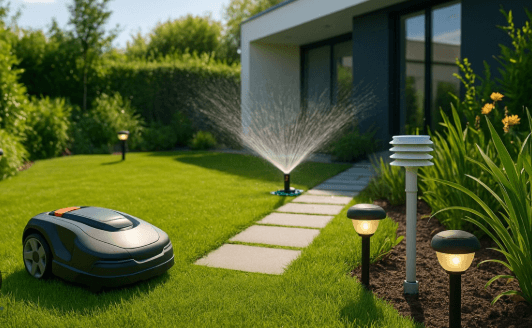
Smart irrigation systems use soil moisture sensors and live weather data to deliver water only when the ground needs it.
They won’t kick on during a rainstorm, and they won’t let your borders go parched during a two-week dry spell while you’re on vacation in Lanzarote.
Drip irrigation is especially efficient, delivering water directly to root zones instead of showering everything indiscriminately. You’ll lose far less to evaporation, and your plants will actually be healthier for it.
The upfront cost may make you hesitate, but the reduction in water bills and plant losses will make it worth every penny within a season or two.
4. Make the Most of Every Square Metre
Not everyone has the luxury of space. So, if you have a small outdoor area, step back and look at how you actually use the space.
In fact, your small garden doesn’t have to feel cramped. Climbing roses, trained fruit trees, and wall-mounted planters draw the eye upward and add greenery without sacrificing ground space.
Raised beds are another clever trick; they improve drainage, warm up faster in spring, and make harvesting or weeding far less backbreaking.
Want to take it a step further? You can add a low garden wall that doubles as seating, a pergola that provides shade and supports climbing plants, and a compost area tucked neatly behind a slatted screen.
And if you’re staring at an awkward corner with no idea what to do with it, that’s usually a sign to call in a professional. A professional who offers landscaping services can spot opportunities you’d walk past every day and turn wasted space into something useful.
5. Consider Lawn Alternatives
This is where things can feel a bit radical or more like common sense, depending on your current lifestyle and how many weekends you’ve already spent mowing.
Traditional grass lawns are hungry, thirsty, and demanding. They need mowing every week through summer, feeding a couple of times a year, and constant attention to stay polished. And for what? A green rectangle that serves no ecological purpose whatsoever.
For this reason, lawn alternatives are taking over. Creeping thyme, for instance, forms a low, fragrant carpet that handles light foot traffic, doesn’t need mowing, and flowers beautifully in summer.
Prefer something more contemporary? Gravel gardens with low-growing plants threaded through them are becoming more popular, especially in drier areas.
And if you’re not ready to give up grass completely, don’t worry. Mixing microclover into your lawn is an easy middle ground. It stays greener during dry spells, feeds the soil naturally, and turns your lawn into a place pollinators want to visit.
See also: Common Mistakes Homeowners Make When Hiring a Window Company
6. Design Your Garden for Year-Round Interest
You’ve built something solid. Now, let’s make sure it earns its keep in January as well as June.
A garden with year-round interest isn’t as complicated as it sounds. You just need a mix of plants that take turns showing up.
For example, snowdrops and hellebores carry things through the colder months, then hardy geraniums and alliums step in for spring. By midsummer, rudbeckia, echinacea, and ornamental grasses can take over and keep things going well into autumn.
Remember, structure matters just as much as colour. Evergreens, clipped topiary, and strong, architectural grasses hold everything together when flowers fade. Even bare stems, like dogwood in winter, can look striking even when the rest of your garden has died back.
It’s also worth holding off on the big autumn clear-out. Leave a few seed heads standing, and they’ll catch the frost beautifully, giving birds something to feed on when food is scarce.
Conclusion
At the end of the day, your garden should be a place where you actually spend time, not just a site where you perform manual labour for the local weed population.
By transitioning to smarter landscaping solutions, you can finally stop playing a losing game of ‘man vs moss’ and start enjoying the view with a drink that isn’t lukewarm tea.
So, put down the trowel, trust the native plants to do their thing, and embrace the glory of a garden that knows how to look after itself.