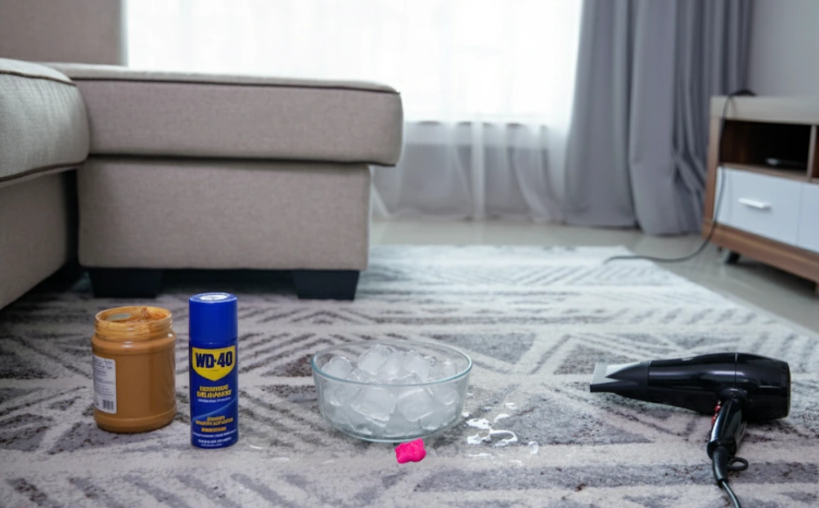
You don’t notice it at first. It’s only when your shoe refuses to lift cleanly that you realise that something is wrong. That’s when you spot it: a small, stubborn lump of gum pressed deep into your carpet.
Your first instinct might be to tug it out and hope for the best, but that usually ends in frayed threads and a bigger mess than you started with.
Luckily, you don’t need strong chemicals or aggressive scrubbing. So, keep reading to learn how to remove gum naturally, without ruining your rug in the process.
Know What You’re Dealing With
Before you start throwing cleaners at your carpet and hoping for the best, you need to understand what you’re actually up against.
Gum is made from polymers—stretchy, elastic compounds that are designed to bend without breaking. That’s what gives gum its satisfying chew and why it doesn’t fall apart in your mouth.
Unfortunately, those same bendy qualities allow the gum to wrap itself around individual fibres, gripping tighter the more you pull at it.
And here’s the frustrating part: the warmer the gum is, the more it stretches, smears, and digs itself in deeper.
Fortunately, certain everyday ingredients can make it brittle or loosen its hold on the fibres altogether. That’s why natural methods tend to work so well; they deal with the problem without damaging your carpet in the process.
Get Set Before You Start
Now that you know why gum behaves the way it does, the next step is setting yourself up to deal with it properly.
A few ice cubes in a thick plastic bag are essential, so make sure the bag isn’t flimsy or leaking unless you want to swap a sticky problem for a damp one.
You’ll also need a soft cloth for dabbing, along with something blunt for scraping, like a butter knife or a spoon. Sharp tools might sound more effective in theory, but in reality, they’re far more likely to snag fibres and leave behind damage you can’t undo.
If the gum has spread around a bit, it’s worth having a few natural cleaners on hand. Baking soda, white vinegar, lemon juice, and a bit of water will cover most scenarios without bringing harsh chemicals into the mix.
Freeze the Gum
Since heat is what makes gum cling and stretch, the smartest move is to cool it down before you try removing it.
To do this, place a few ice cubes into a thick plastic bag and press it gently onto the gum. Hold it there for around 10 to 15 minutes, keeping the pressure light and steady.
You’re aiming to harden the gum, not soak the carpet, though, so check every few minutes to make sure excess moisture isn’t seeping into the fibres.
Once it feels hard rather than tacky, you can start removing it with a spoon or butter knife, lifting it from the outer edges and working your way in. If the gum starts to soften again, simply reapply the ice and try again.
You may find that it’s coming away in pieces rather than all at once, which is completely fine. What matters is that the bulk of it lifts cleanly, leaving only a slight residue behind.
Loosen the Residue
Once the bulk of the gum is gone, you’ll usually be left with a faint residue. It might not look like much, but if you leave it there, it’ll quietly attract dirt and dust until the patch starts to stand out.
White vinegar and lemon juice work well here because they weaken the gum’s grip without damaging the fabric itself.
Lightly dampen a clean, non-abrasive cloth with your preferred ingredient and press it onto the affected area, or apply a small amount using a spray bottle for more control.
Then, give it a minute or two to settle in. As the residue loosens, you’ll notice it losing that tacky feel. Finally, using the cloth, gently dab and lift what’s left, taking care not to pull or twist the pile.
Just keep in mind that if your rug is particularly delicate or made from natural fibres, you need to test the solution on a hidden spot first to avoid fading or textural changes.
See also: Common Mistakes Homeowners Make When Hiring a Window Company
Restore the Fibres
Gum can press dirt deeper into your carpet or slightly displace the pile, which is why the spot can look darker or uneven once everything is dry. If that happens, a gentle clean is usually all it takes to even things out.
To do this, professional carpet cleaning experts recommend mixing a small amount of baking soda with a few drops of water to form a thick paste, then applying it lightly to the area. Let it sit for a few minutes so it can absorb any trapped grime.
After that, take a clean, damp cloth and gently blot the area, lifting the paste away. If the patch still looks a bit off, repeat the process once more and reassess once it’s fully dry.
Finish things off by blotting the area with a dry cloth to remove excess moisture and allow the fabric to air dry naturally. As it dries, the fibres should relax back into place, leaving the area looking far less noticeable.
Prevent Future Accidents
Once you’ve dealt with gum properly, the last thing you want is a repeat performance. Fortunately, a few simple habits will help you avoid this scenario.
- Check your shoes. A quick glance before walking inside, especially after being out in busy areas, can save you from discovering gum on your carpet later.
- Set rules for your children. Getting your kids into the habit of binning their gum immediately before distractions kick in will cut down the chances of it ever reaching your carpet.
- Spot problems early. Regular vacuuming won’t remove gum on its own, but it’ll help you notice anything unusual before it’s been walked on and pressed deeper into the fibres.
Conclusion
And there you have it—the next time you spot gum stuck in your carpet, you won’t need to stare at it in disbelief.
You’ve got a plan, and it doesn’t involve harsh chemicals or crossed fingers. So, take a breath, grab what you need, and deal with it properly. Trust us, your carpet will bounce back, and you’ll get on with your day like nothing ever happened!